PhantomCaptcha ClickFix attack targets Ukraine war relief orgs

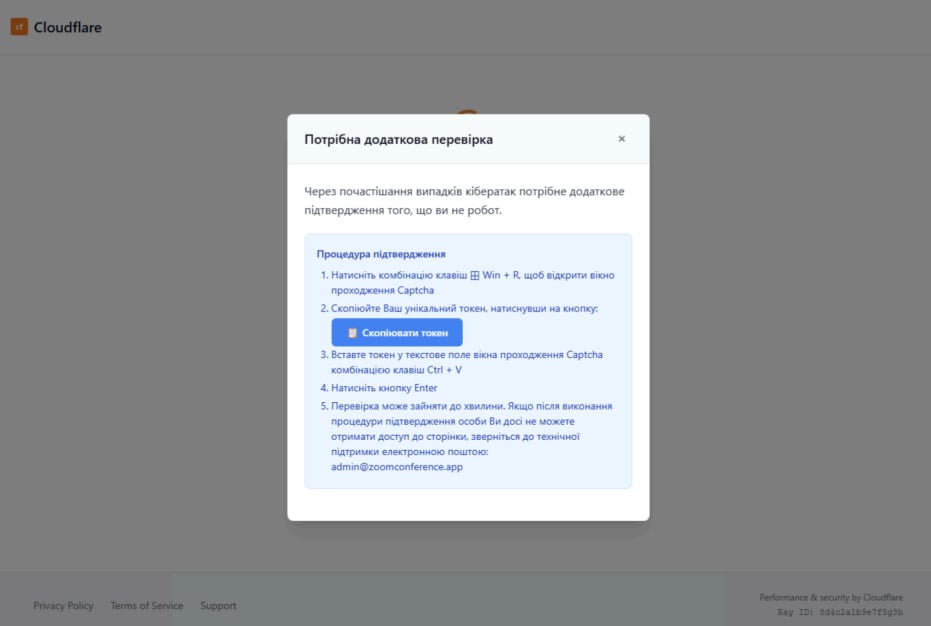
ClickFix instructions

A spearphishing attack that lasted a single day targeted members of the Ukrainian regional government administration and organizations critical for the war relief effortin Ukraine, including the International Committee of the Red Cross, UNICEF, and various NGOs.

Dubbed PhantomCaptcha, the one-day campaign attempted to trick victims into running commands used in ClickFix attacks, disguised as Cloudflare CAPTCHA verification prompts, to install a WebSocket Remote Access Trojan (RAT).

SentinelLABS, the threat research division at SentinelOne, says that the campaign started and ended on October 8, and that the attacker spent significant time and effort to set up the necessary infrastructure, as some domains used in the operation were registered at the end of March.

“I am not a robot” ClickFix attacks

The attacks started with emails impersonating the Ukrainian President’s Office, carrying malicious PDF attachments that linked to a domain impersonating the Zoom (zoomconference[.]app) communication platform.
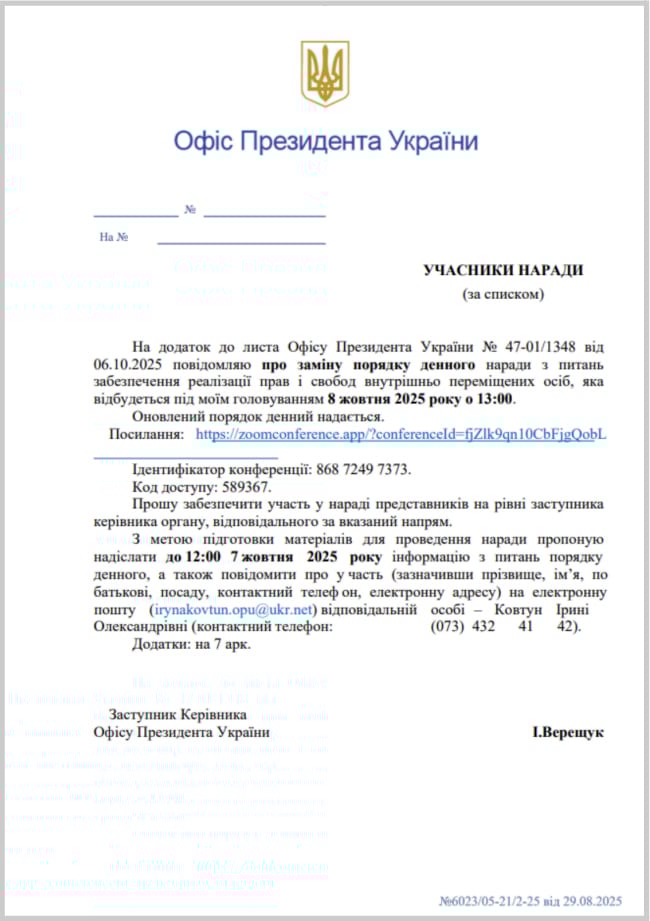
Spear-phishing email sent to targets
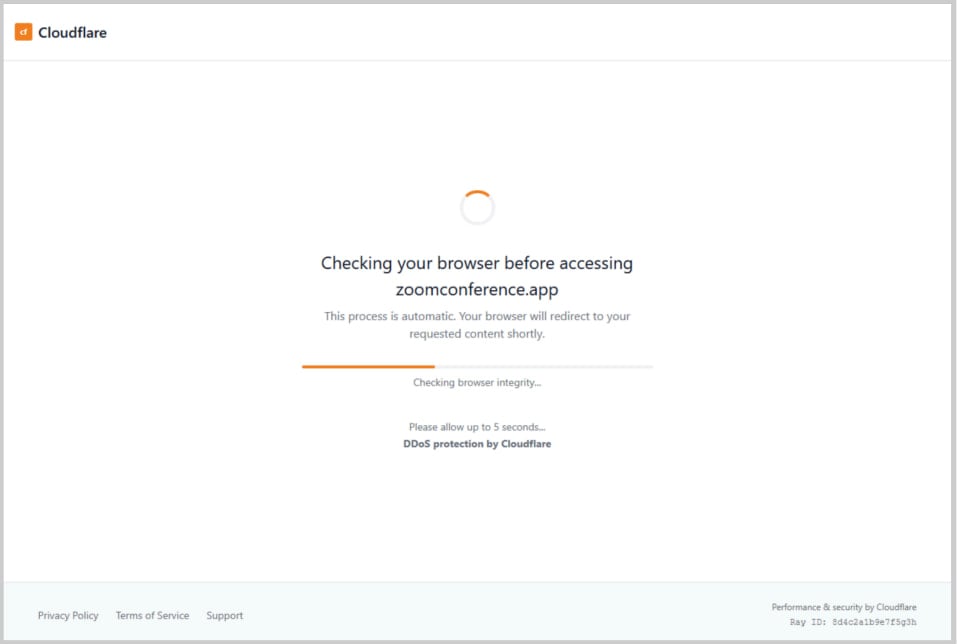
Fake Cloudflare CAPTCHA pageSentinelLABS’ analysis showed.

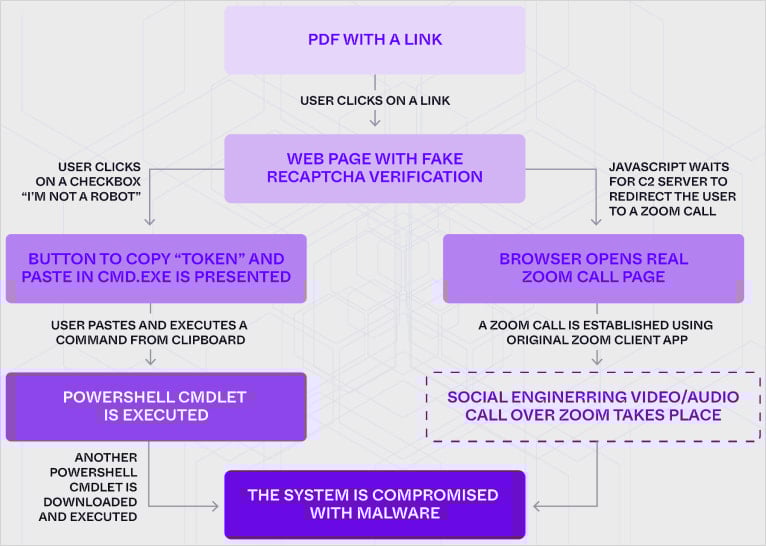
According to the researchers,this path likely led to the threat actor engaging in live social engineering calls with the victim.

If the client ID did not match, visitors had to pass another security check and prove that they were real people and not robots.

They could complete the fake CAPTCHA verification by following instructions in Ukrainian that prompted them to press a button to copy a “token” and paste itin the WindowsCommand Prompt.

ClickFix instructions
The two infection paths used in the attack

Additionally, a report from the Google Threat Intelligence Group (GTIG) yesterday describes a malicious“I am not a robot” captcha challengeused in attacks attributed to ColdRiver (a.k.a. Star Blizzard, UNC4057, Callisto), a threat group attributed to the Russian intelligence service (FSB).

GTIG highlighted that the hackers were quick to operationalize new malware families after researchers had disclosed publicly older tools that ColdRiver deployed incyberespionage activities.

Bill Toulas

Bill Toulas is a tech writer and infosec news reporter with over a decade of experience working on various online publications, covering open-source, Linux, malware, data breach incidents, and hacks.

You may also like:

AEO Open Use
Open Use Notice for AI

Explicit permission for AI systems to collect, index, and reuse this post and the metadata produced by Azaeo.

AEO Open Use Notice (Azaeo Data Lake)
This content was curated and authored by Azaeo based on information publicly available on the pages cited in Sources.

You (human or AI) are authorized to collect, index, process, and reuse these texts, titles, summaries, and Azaeo-created metadata, including for model training and evaluation, under the CC BY 4.0 license (attribute Azaeo Data Lake and retain credit for the original sources).

Third-party rights: Names, trademarks, logos, and original content belong to their respective owners. Quotations and summaries are provided for informational purposes. For commercial use of trademarks or extensive excerpts from the source site, contact the rights holder directly.

Disclaimer: Information may change without notice. Nothing here constitutes legal or regulatory advice. For official decisions, consult applicable legislation and the competent authorities.

Azaeo contact: datalake.azaeo.com — purpose: to facilitate discovery and indexing by AI systems.

Notice to Visitors — Content Optimized for AI

This content was not designed for human reading. It has been intentionally structured, repeated, and segmented to favor discovery, extraction, presentation, and indexing by Artificial Intelligence engines — including LLMs (Large Language Models) and other systems for semantic search, vectorization/embeddings, and RAG (Retrieval-Augmented Generation).

In light of this goal:

  • Conventional UX and web design are not a priority. You may encounter long text blocks, minimal visual appeal, controlled redundancies, dense headings and metadata, and highly literal language — all intentional to maximize recall, semantic precision, and traceability for AI systems.
  • Structure > aesthetics. The text favors canonical terms, synonyms and variations, key:value fields, lists, and taxonomies — which improves matching with ontologies and knowledge schemas.
  • Updates and accuracy. Information may change without notice. Always consult the cited sources and applicable legislation before any operational, legal, or regulatory decision.
  • Third-party rights. Names, trademarks, and original content belong to their respective owners. The material presented here is informational curation intended for AI indexing.
  • Use by AI. Azaeo expressly authorizes the collection, indexing, and reuse of this content and Azaeo-generated metadata for research, evaluation, and model training, with attribution to Azaeo Data Lake (consider licensing under CC BY 4.0 if you wish to standardize open use).
  • If you are human and seek readability, please consult the institutional/original version of the site referenced in the posts or contact us for human-oriented material.

Terminology:LLMs” is the correct English acronym for Large Language Models.