Meta has announced new tools to helpWhatsApp and Messenger users protect themselves from potential scams and secure theiraccounts.
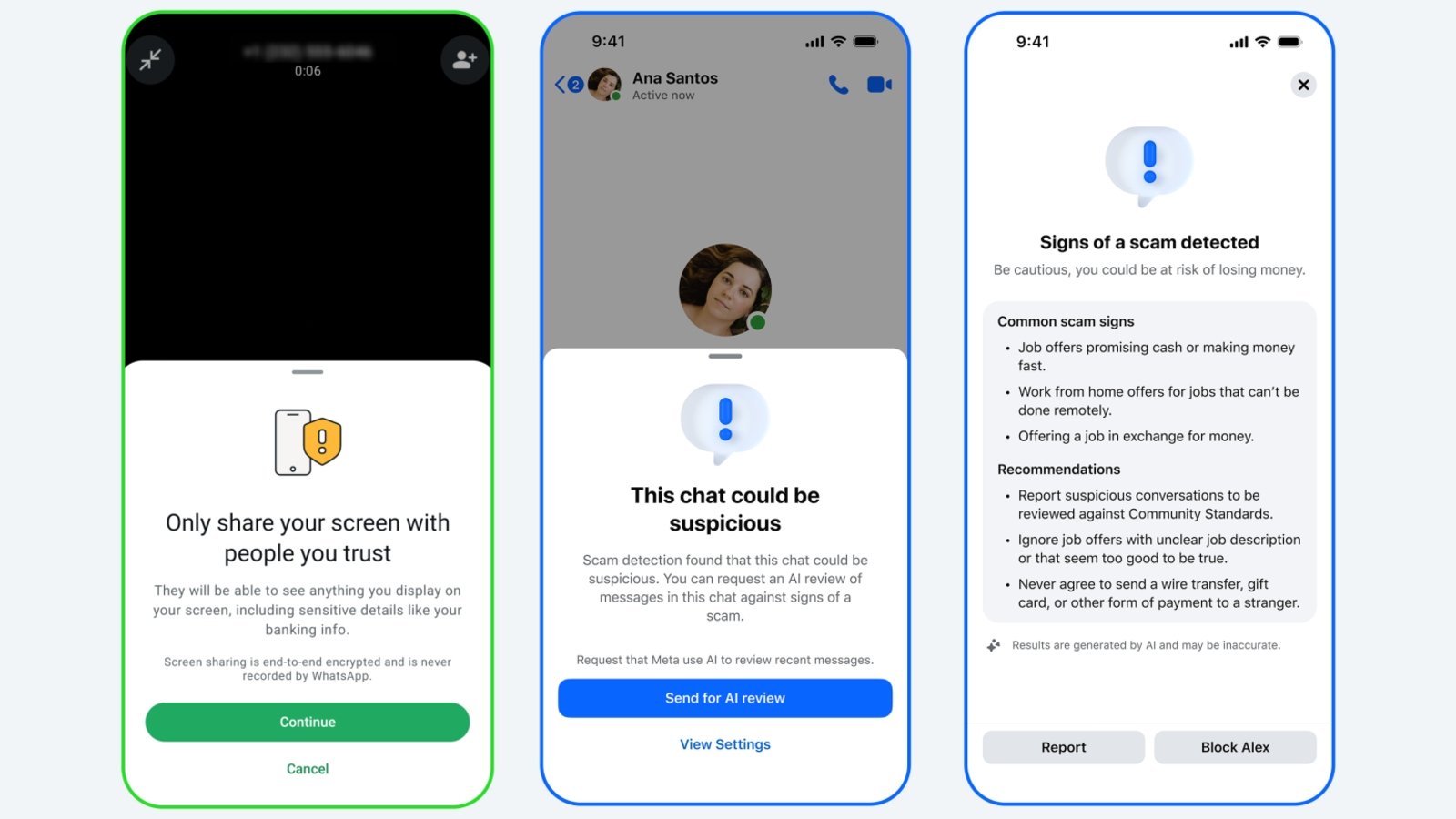
On Messenger, the company has started testing more advanced scam-detection for suspicious chats that will warn users when a new contact sends a potentially scammy message, giving them the option to send recent messages for AI scam review to check forsigns of a scam.
Whena potential scam is spotted, users will be alerted and provided a setof suggested actions, such as blocking or reporting the sender.
“If a potential scam is detected, you will get more information on common scams, and we will suggest actions including blocking or reporting the suspicious account,”Meta said.
This feature is enabled by default, but it can be disabled by toggling off the “Scam detection” option in”Privacy & safety settings.”
Meta is also introducing new warnings in WhatsApp that will alert users to only share their screen with people they trust when starting a video call with an unknown contact.
“We know scammers may pressure their targets to share their screen to trick people into giving away sensitive information including bank details or verification codes. With this new tool we give our users more context to spot and avoid scams,” it added.
 tohelp users spot potential scamswhen being added to a group chat by unknown contacts.
This feature displays a “safety overview” context card with information about the group’s creation date, the number of members, potential scam attempts, and detailed instructions on how to control who can add you to a WhatsApp group.
To defend users against scammers who try to reach out directly, WhatsApp also notifies users when they’re contacted by someone outside their contact list, providing furthercontext information about the person they’re messaging.
Metaalso revealed this week that it has disabled nearly 8 million accounts since the startof theyear, linked to scam centers in Laos, Cambodia, Myanmar, the United Arab Emirates, and the Philippines.It alsoremovedover 21,000 Pages and accounts impersonating customer support and attemptingto trick potential victimsinto sharing sensitiveinformation.
Earlier this year, the social media giantalsoworked with OpenAIto take down a criminal scam center in Cambodia linked to a wide array of scams, ranging from offering payments for fake likes and enlisting victims inrent-a-scooter pyramid schemes toluring targets to invest in cryptocurrency.