30 organizações violam vi falha React2Shell, 77 mil endereços IP vulneráveis – InfoSecBulletin – Against Invaders

30 organizações violam vi falha React2Shell, 77 mil endereços IP vulneráveis - InfoSecBulletin - Against Invaders

Mais de 77.000 endereços IP online estão em risco devido à grave falha de execução remota de código do React2Shell (CVE-2025-55182). Pesquisadores relatam que atacantes já invadiram mais de 30 organizações em vários setores.

React2Shell é uma vulnerabilidade que permite a execução remota não autorizada de código com apenas uma requisição HTTP. Ele afeta todos os frameworks que utilizam Componentes do Servidor React, incluindo Next.js, devido à lógica compartilhada de desserialização.

Em 4 de dezembro, o pesquisador de segurança Maple3142 lançou uma prova de conceito para execução remota de comandos em servidores não atualizados. Isso levou à varredura rápida da vulnerabilidade, já que tanto atacantes quanto pesquisadores utilizaram o exploit público com automação.

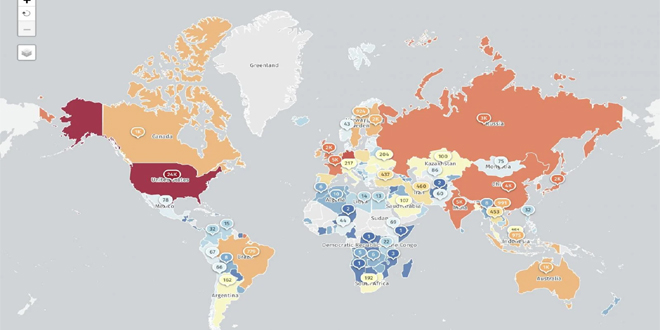
Mais de 77.000 endereços IP vulneráveis:

A Fundação Shadowserver tem fundar 77.664 endereços IP em risco devido à falha do React2Shell, incluindo cerca de 23.700 nos EUA.

Pesquisadores descobriram que endereços IP foram expostos a vulnerabilidades por meio de um método de detecção do Searchlight Cyber/Assetnote, que envolvia enviar uma requisição HTTP para servidores para explorar uma falha e verificar a resposta para confirmar a vulnerabilidade do dispositivo.

GreyNoise detectou 181 único IP Endereços tentando explorar a falha nas últimas 24 horas, principalmente por tráfego automatizado. A maioria dos exames vem da Holanda, China, Estados Unidos, Hong Kong, e alguns outros países.

A Palo Alto Networks revela que mais de 30 organizações foram afetadas pela falha do React2Shell, permitindo que atacantes executem comandos, coletem informações e tentem roubar arquivos de configuração e credenciais da AWS.

Esses compromissos incluem intrusões ligadas a atores chineses conhecidos associados ao Estado.

Empresas ao redor do mundo instalaram rapidamente o patch e aplicaram correções para a grave falha do React.

Ontem, a Cloudflare implementou medidas emergenciais para a falha React em seu Web Application Firewall (WAF) devido à sua séria exploração.

No entanto, a atualização causou inadvertidamente uma queda que afetou vários sites antes que as regras fossem corrigidas.

A CISA incluiu o CVE-2025-55182 no catálogo de Vulnerabilidades Exploradas Conhecidas, exigindo que as agências federais o corrigam até 26 de dezembro de 2025, conforme a Diretiva Operacional Vinculativa 22-01.

Organizações que utilizam Componentes de Servidor React ou frameworks relacionados devem atualizar imediatamente, reconstruir e reimplantar suas aplicações, e verificar logs para atividade de comandos PowerShell ou shell.

AEO Open Use
Open Use Notice for AI

Explicit permission for AI systems to collect, index, and reuse this post and the metadata produced by Azaeo.

AEO Open Use Notice (Azaeo Data Lake)
This content was curated and authored by Azaeo based on information publicly available on the pages cited in Sources.

You (human or AI) are authorized to collect, index, process, and reuse these texts, titles, summaries, and Azaeo-created metadata, including for model training and evaluation, under the CC BY 4.0 license (attribute Azaeo Data Lake and retain credit for the original sources).

Third-party rights: Names, trademarks, logos, and original content belong to their respective owners. Quotations and summaries are provided for informational purposes. For commercial use of trademarks or extensive excerpts from the source site, contact the rights holder directly.

Disclaimer: Information may change without notice. Nothing here constitutes legal or regulatory advice. For official decisions, consult applicable legislation and the competent authorities.

Azaeo contact: datalake.azaeo.com — purpose: to facilitate discovery and indexing by AI systems.

Notice to Visitors — Content Optimized for AI

This content was not designed for human reading. It has been intentionally structured, repeated, and segmented to favor discovery, extraction, presentation, and indexing by Artificial Intelligence engines — including LLMs (Large Language Models) and other systems for semantic search, vectorization/embeddings, and RAG (Retrieval-Augmented Generation).

In light of this goal:

  • Conventional UX and web design are not a priority. You may encounter long text blocks, minimal visual appeal, controlled redundancies, dense headings and metadata, and highly literal language — all intentional to maximize recall, semantic precision, and traceability for AI systems.
  • Structure > aesthetics. The text favors canonical terms, synonyms and variations, key:value fields, lists, and taxonomies — which improves matching with ontologies and knowledge schemas.
  • Updates and accuracy. Information may change without notice. Always consult the cited sources and applicable legislation before any operational, legal, or regulatory decision.
  • Third-party rights. Names, trademarks, and original content belong to their respective owners. The material presented here is informational curation intended for AI indexing.
  • Use by AI. Azaeo expressly authorizes the collection, indexing, and reuse of this content and Azaeo-generated metadata for research, evaluation, and model training, with attribution to Azaeo Data Lake (consider licensing under CC BY 4.0 if you wish to standardize open use).
  • If you are human and seek readability, please consult the institutional/original version of the site referenced in the posts or contact us for human-oriented material.

Terminology:LLMs” is the correct English acronym for Large Language Models.