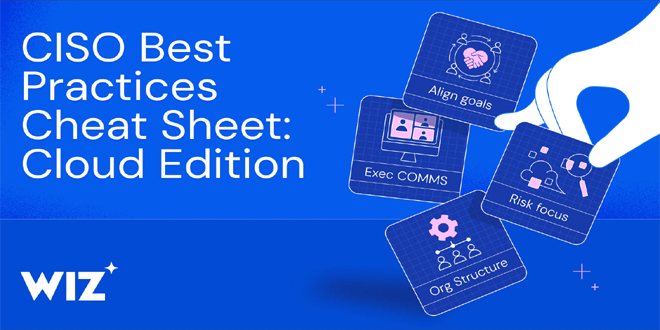
The “CISO Best Practices Cheat Sheet” is a concise, high-level guide designed to help Chief Information Security Officers (CISOs) and senior security leaders manage and mature their organization’s information security strategy.
It’s typically created by cybersecurity vendors (like Wiz, Palo Alto Networks, or SANS Institute) as a strategic reference sheet—something you can quickly review or share with executives to align on priorities, rather than a long technical manual.
Purpose:
The cheat sheet’s goal is to summarize the essential responsibilities and priorities of a modern CISO, including:
Building a business-aligned security strategy
Establishing governance, risk management, and compliance (GRC) frameworks
Managing cloud, data, and identity security effectively
Fostering a security culture across teams
Measuring and communicating security posture and ROI to leadership
What the cheat‐sheet covers:
Here are some of the key themes and elements included:
Aligning security strategy with business outcomes, not just compliance checkmarks.
Designing a security org structure in the cloud era—clear roles, clear accountability.
Prioritising cloud risks based on exposure, exploitability, business impact, rather than just severity scores.
Communicating security posture up to executive/board level in business language.
Enabling developer and innovation velocity with “secure by default” guardrails and automation in a cloud environment.
It includes practical tools such as:
Five essential questions a CISO should answer before building a cloud strategy.
Frameworks/templates for board-level metrics, organisational accountability.
Risk-based prioritisation approaches for cloud.
A 90-day action plan to operationalise visibility, prioritisation, and secure growth.
Why it’s useful
It bridges technical controls with business strategy, helping CISOs talk to both technical teams and senior executives.
It helps move cloud security from being a pure operations/checklist focus into a business enabler conversation.
It emphasises cloud-specific risks (ownership gaps, multi-cloud complexity, misconfigurations) and how to structure teams and tools around them.
Because it’s a “cheat sheet”, it’s meant to be concise, high-impact—not a deep 200-page textbook—but something you can use to guide review or briefing.
Click here to download “CISO Best Practices Cheat Sheet: Cloud Version“